

Opening of the Legal Year, 2026
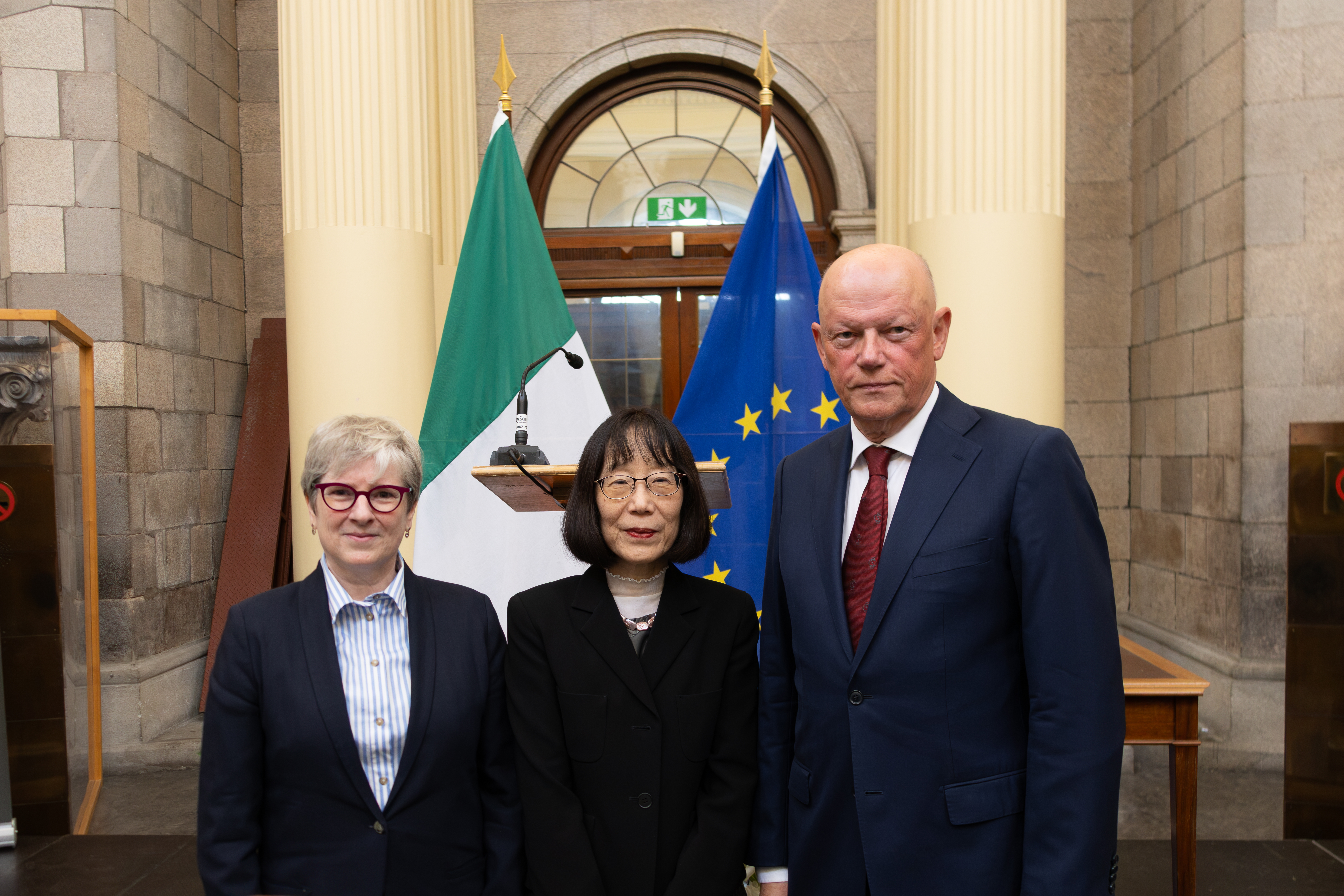
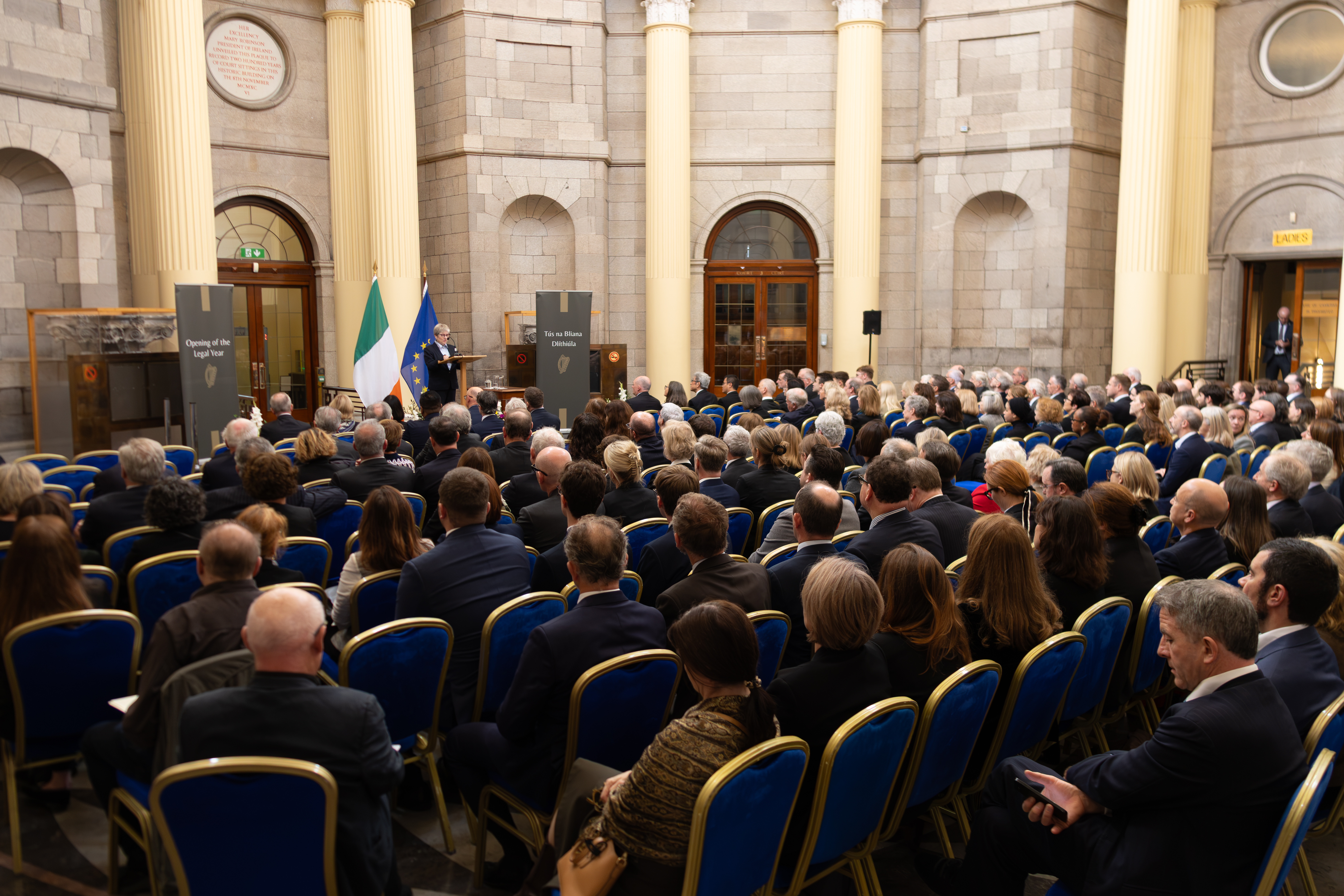
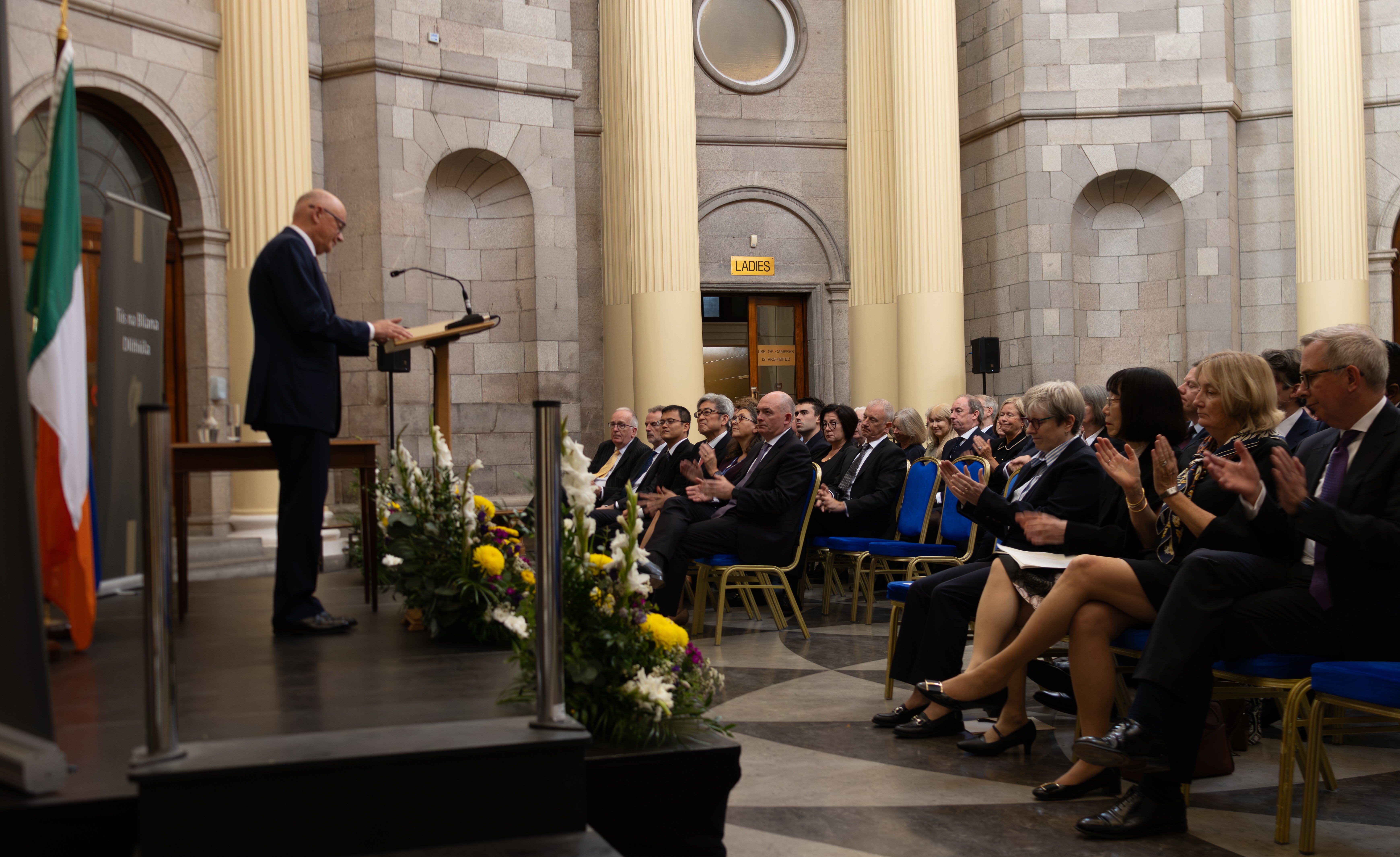
On Monday 5 October, the Opening of the Legal Year 2026 was marked by a ceremony held in the Round Hall of the Four Courts which gathered together over 200 members of the Irish and international legal community. The ceremony was chaired by Ms Justice Aileen Donnelly, Judge of the Supreme Court and Chair of the Courts Service Board; the two keynote speeches were delivered by Judge Tomoko Akane, President International Criminal Court, and Mr Justice Donal O’Donnell, Chief Justice.
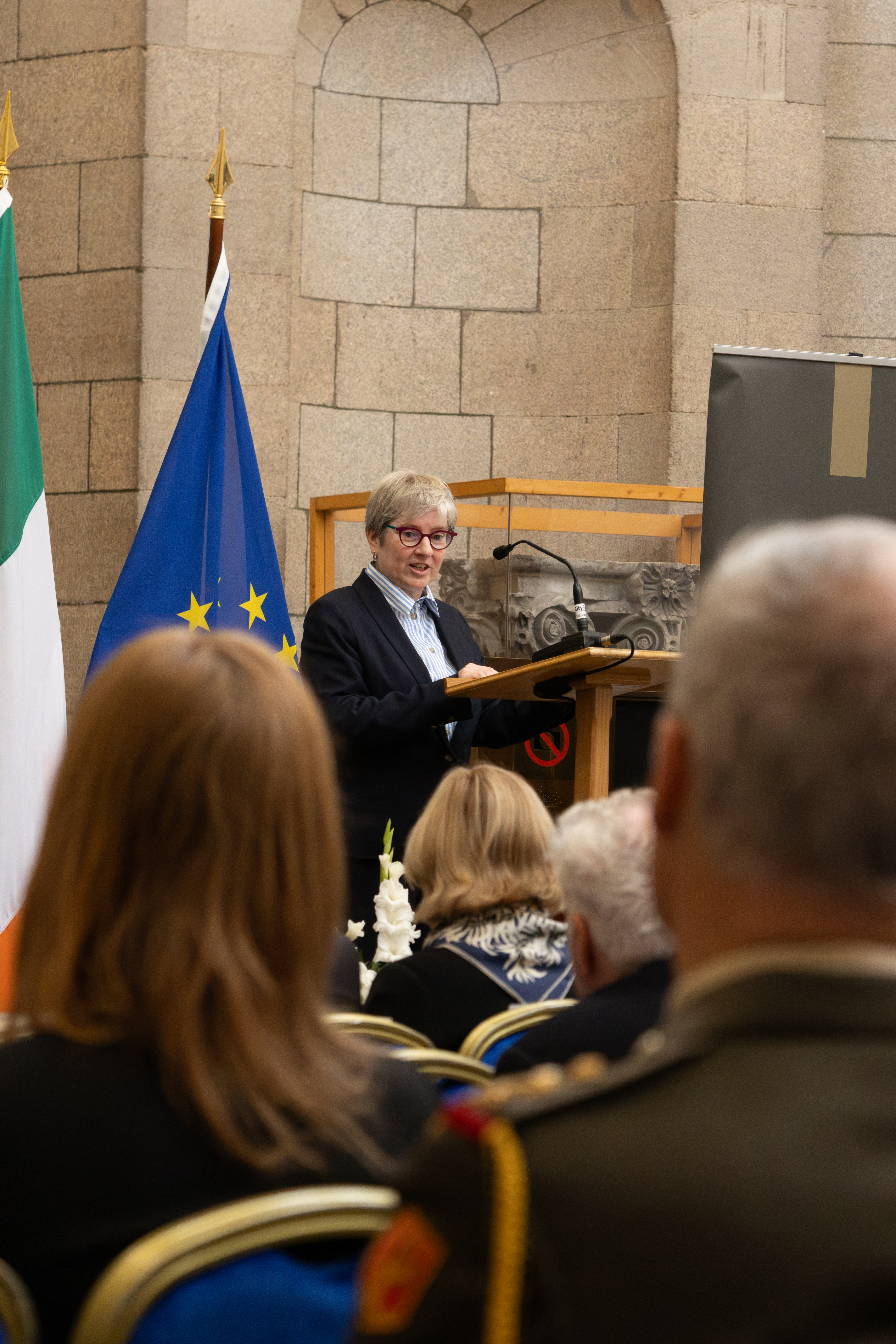
The ceremony was opened with a welcome address by Ms Justice Aileen Donnelly, judge of the Supreme Court and Chair of the Courts Service Board, who highlighted the work of the Courts Service in supporting the wider administration of justice in Ireland.
"Confidence in the public administration of justice is enhanced by governmental and legislative resourcing of the courts, through effective management of the courts, through the provision of information to the public on the functioning of the court system and of course through judges who act independently and impartially to uphold the laws”.
Commenting on the work of the Courts Service over the last year, Ms Justice Donnelly said: “Our approach to co-designing information and services with users in mind is making a difference.”
Ms Justice Donnelly highlighted several ongoing modernisation initiatives being pursued with energy by the Courts Service, including the recent roll out of a Unified Case Management System (UCMS) across court jurisdictions, increased data capability, and also increasing the quality and availability of data gathered from court activity to inform decisions around operational, policy and resourcing decisions in the Courts Service and the wider Justice system. She also spoke of the works that had been carried out by the OPW recently in an effort to make the Four Courts a more accessible building to all court users.
Ms Justice Donnelly further pointed to the refreshed Courts Service website which has received a score of 100% for accessibility from the National Adult Literacy Agency, the revised District Court and Circuit Court forms which are designed for accessibility, consistency and clarity in consultation with the judiciary, legal practitioners and other key stakeholders, and the success of other online services now provided by the Courts Service, particularly in the area of Probate which saw 45% of all grants of probate applications being filed online by solicitors within just 100 days of launching.
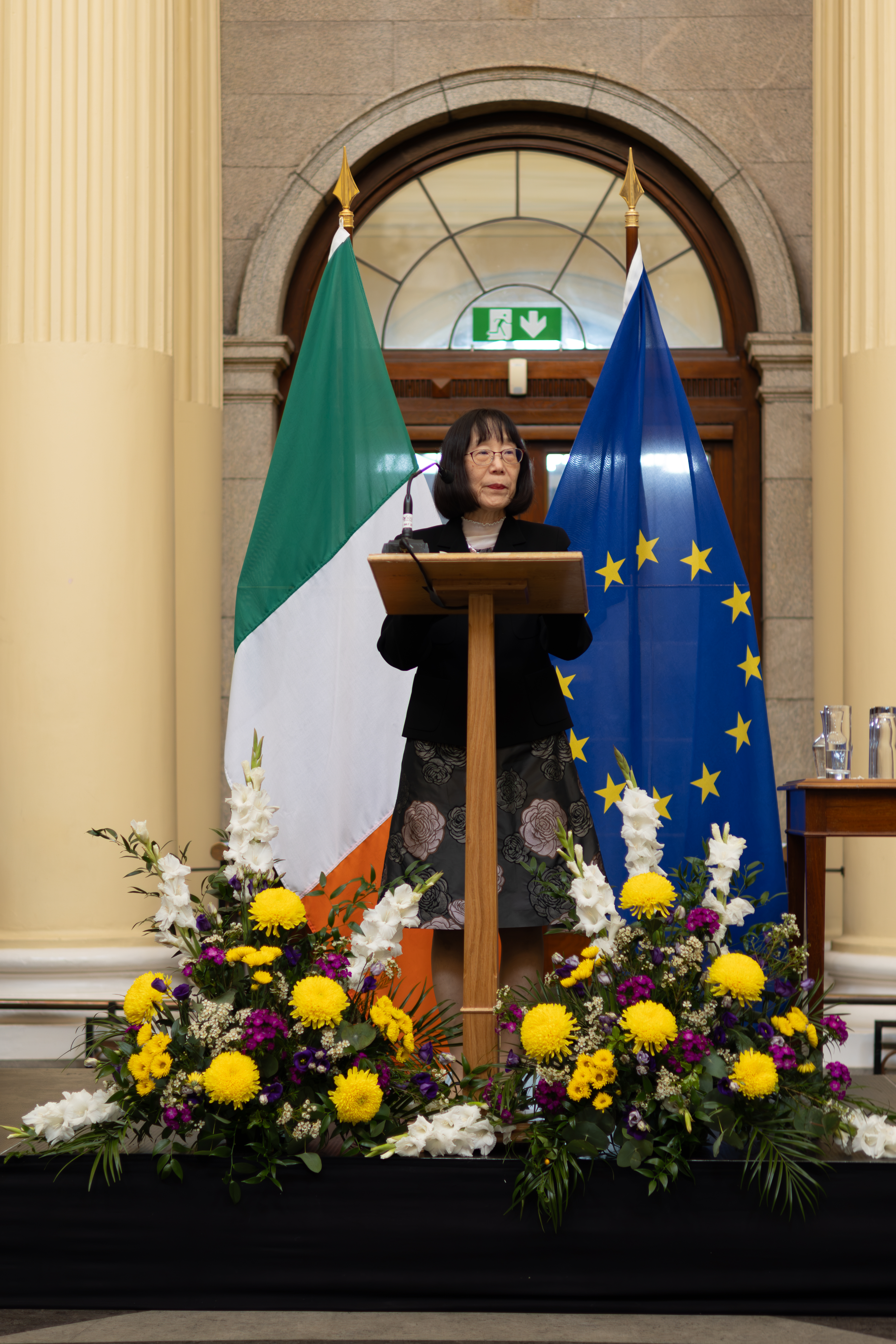
The speech delivered by President Akane centred on the importance of the rule of law and protecting judicial institutions. President Akane spoke of the obstacles faced by the International Criminal Court at present, in particular the sanctions imposed by the US government on some its judges and prosecutors, including President Akane herself, some of the ICC’s officials being convicted in absentia of offences by Russia, and the interference of cyberattacks on its work. She characterised these concerns as a broader assault against the rule of law.
“I represent a judicial institution that was created as a result of the historical sufferings that humankind has endured. In 1998, States gathered in Rome to create a permanent international criminal court that has jurisdiction over war crimes, crimes against humanity, and genocide, determined to put an end to impunity for these crimes.
Ireland upholds the rule of law to a remarkably high standard, and it has always been amongst the strongest supporters of the International Criminal Court ever since its inception in 2002.
In the case of the ICC, we have faced several obstacles since our establishment, but this has intensified significantly during the last few years.
Today, the United States has sanctioned several ICC Judges and prosecutors, including myself, for carrying out their duties under the Rome Statute. Several current and former ICC officials have been convicted and sentence in absentia by Russia for their activities in relation to the situation in Ukraine, which again includes me.
At this moment, 12 of the 18 ICC Judges are the subject of at least one of these coercive measures. The institution also faces cyberattacks and other measures that are aimed at interfering with judicial proceedings and changing our course.
Such attacks against independent servants of the law are couched in narratives that are specific to the ICC and its activities, but they are also part of a broader assault against the rule of law.
It is of vital importance that courts, whether that is the ICC or any other court, remain independent and free from political pressure or any kind of coercion."
Speaking after President Akane, Mr. Justice Donal O’Donnell, Chief Justice of Ireland, expressed his gratitude to her for providing a first-hand view of the work of the International Criminal Court, and the difficult position the Court and its judges find themselves in, particularly in light of unjustified sanctions imposed against them.
Speaking on the importance of the rule of law, Chief Justice O’Donnell observed that
"[t]his brings into focus the importance of seeking to protect courts, judges and court systems against attack. That should not just be the concern of other judges, lawyers or NGOs operating in the justice sector – it should be the concern of anyone who wants to live in a free society that respects the individual and protects their rights And while the position in relation to the ICC is only the most recent and prominent example, it is only part of a wave of what is being properly and rightly called “rule of law backsliding”, but which involves a fundamental challenge to the post Second World War model of full adult franchise representative democracy, limited by a Constitution which alone, or together with other instruments, guarantees individual rights."
Reflecting on the matters of specific interest to the Irish Judiciary, the Chief Justice spoke of the progress and challenges of the recently established Judicial Appointments Commission, the need for an independent body to advise of renumeration, tax and pensions of members of the judiciary as recommended by GRECO and the European Commission. He also welcomed the inclusion by the Government in its Autumn Legislative Programme of the Courts Security Bill, in light of the increasingly aggressive, intrusive and disruptive behaviour targeted at the courts in recent times.
Chief Justice O’Donnell also reflected on the recent progress made in regard to accessibility of the courts, in particular the coverage of Supreme Court proceedings which are captured in both plain English judgment summaries periodically published and the new practice of broadcasting recorded Supreme Court hearings. Noting the general attitude of the Irish judiciary as being amenable to modernisation and enthusiastic about continuous judicial training, the Chief Justice commented on the desirability of making resources available to not only making the courts more accessible to all court users, but also for increasing public awareness and understanding of the function and processes of the courts system as a whole.
The Chief Justice also referred to the long running dispute between solicitors on the criminal legal aid panel and the Department of Justice and expressed his hope that the dispute can be brought to a conclusion soon.
The full speech delivered by the Chief Justice at the Opening of the Legal Year can be read here.